About Me
Consultant and technologist at the intersection of data, AI, and business.
Professional Bio — Long-Form Draft (v1.1)
The short version
I’m an independent consultant and technologist working at the intersection of data, AI, and business. I’ve been an engineer, a researcher, a data scientist, a DevOps person, a startup’s first developer, and a consultant — usually several of those at once. Today I help businesses figure out where AI and data can actually create value, and then I help them build it.
How I work
I like to think of myself as a genuinely no BS person. I don’t like to hype things up or overpromise, or create unrealistic expectations of any kind. My moto is “treat people the way you want to be treated”.
Over the years I learbed first hand that the best technical solution is not automatically the best one. The best solution is the one that customers/clients trust and adopt. Because lack ofadoption is the top reason most data and AI projects die.
Over the last few years generative AI changed the game in a very interesting way. AI has made building tools dramatically cheaper and faster. So the tools themselves are no longer where the value is. The value is in understanding the business - extracting the logic and acumen that lives in people’s heads, knowing from experience which parts will actually drive value, translating that into what gets built, measuring it, and introducing it to the people who’ll use it. It’s the glue between the technology and the human. That’s the part AI won’t take over (yet)
Where I’m headed
The goal for my next chapter in life is to shed the chrysalis of the consultant and transform into a partner, advisor, and investor in a business.
What I’m looking for now is to work with businesses whose missions are worth my time. I care deeply about sustainability and building a better future. And I mean companies doing the actual work, not the ones with a greenwashed ESG poster on the wall. Many of the industries that matter most here, manufacturing among them, are lagging in AI adoption simply because too few people understand both worlds well. I’ve been a researcher, an engineer in a lab, a software developer, a cybersecurity practitioner, someone who’s worked in finance and consulting and product. That combination is unusual, and it’s exactly what it takes to help these businesses close the gap.
If that sounds like the kind of person worth talking to, let’s talk.
How it started
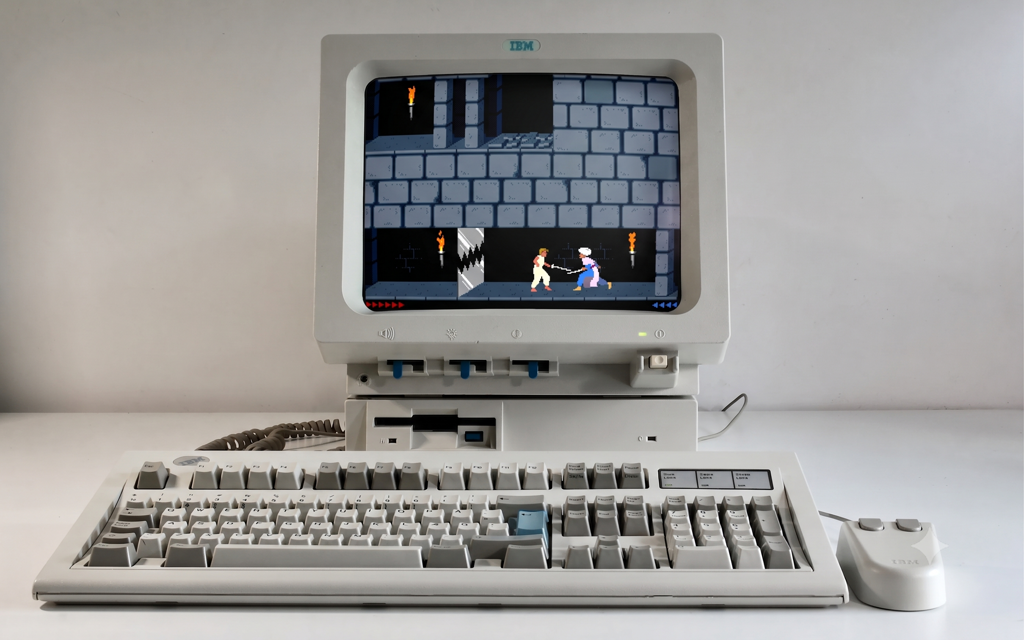
I’ve been fascinated with computers since before I really understood what they were. Early nineties — my dad sat me in front of an old IBM machine at the university where he worked, I drew something in a CAD program and printed it on a dot matrix printer, and it blew my mind. From then on I took every chance to get in front of a computer — his office, internet cafés, painfully slow dial-up — it was a whole new world, and I just wanted to be in it.
When I got my first personal computer in the early 2000s, things accelerated. A simple Flash animation of an electric circuit at a school presentation was a light bulb moment — they can do that, surely so can I. So I taught myself Flash, ActionScript, and HTML from a five-hundred-page bible of a book. By age fifteen I was building websites and selling them, improvising everything along the way. Around the same time I also had a small photography gig, selling prints from school events and competitions. That’s where I picked skills like Photoshop, Illustrator and even some video editing. All of that experience sparked in me a passion for design and UX.
The academic years
Instead of computer science or software engineering, I did my first degree in mechanical/thermal engineering. It was a strategic decision at the time as I knew that formal education in CS is not a prerequsite to “DO computers”. I kept building websites through my uni years, picked up a good mathematical foundation and learned some MATLAB along the way.
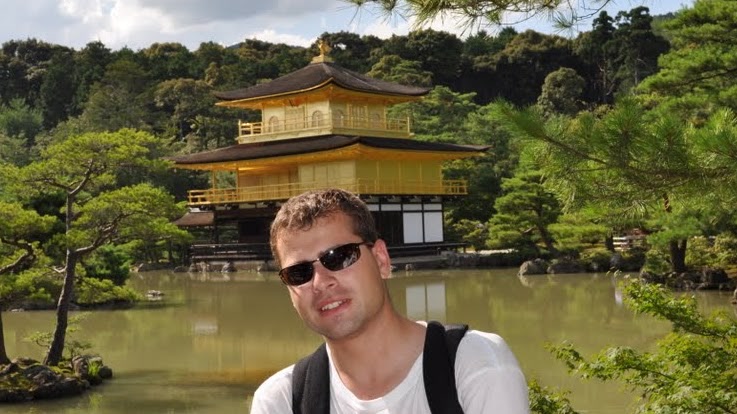
Then things got interesting when I won a scholarship to Japan, where I did my graduate studies and eventually got a PhD. There I fell upon chemical engineering - a new and strange field I had picked up as I went. My 6 years in Japan were spent researching how to recycle very specific polymers by converting them into combustable gas with very hot steam (1000 C+).
The graduate studies taught me how to do research, write for scientific journals, and present work to a demanding audience.
But the thing that redirected my career was, of all things, an argument about graphs.
A disagreement with my supervisor about how to plot data sent me digging into best practice, which culminated in me discovering the R language and the ggplot package.
It was a gateway drug to the world of statistics and data science.
Finance, cybersecurity, and learning everything the hard way
After the PhD, I moved to England and dropped from the cosy embrase of academia straight into clutches ofconsumer finance. An industry I knew nothing about, I barely understood how credit cards worked. In my short period there I learned a lot about finance. But most importantly I also learned that it wasn’t the right industry for me.
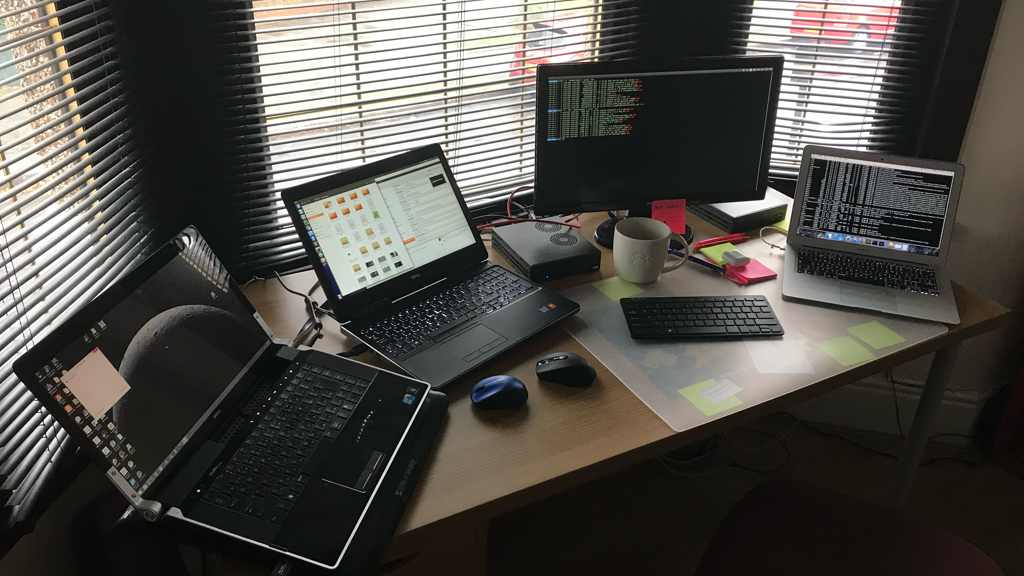
So I moved to London where I accidentaly ended at a job interview for a what turned out to be a stealth cybersecurity startup, and the interview involved a special-forces-style case study that I apparently did well on. I joined as their first developer, doing data science and software engineering and, in practice, absolutely everything: Linux servers, configuration management, shipping the product, installing it at clients. I discovered that the thing I was frantically teaching myself had a name — DevOps. As the company grew, I helped create the sales engineering function, helped stand up the DevOps team and its practices, and finally made my way to the data science work itself - building anomaly detection algorithms and productionising R code. At the time (or ever?) R did not lend itself gracefully to production use. So that was an interesting challenge. That job compressed years of learning into a short time: programming, DevOps, data science, databases, cloud, data visualisation, customer relationships.
Consulting, and going independent
When it was time to move on, I landed at Datasparq, a boutique data science consultancy. It felt like every previous experience had been preparation for exactly that job. Again the learning curve was rather steep, but that’s waht makes it fun. This was the place where I kissed AWS goodbye and cloud ran with GCP (I do not appologies for this pun).
In the early days there’d be at most 2-3 people on a project, so I wore every hat. Over my years there I progressed to the most senior individual contributor position managed people, and did everything a consultancy does: client engagement, pre-sales, estimation, architecture, hands-on delivery.
Then life intervened, in a good way — I got married and moved to Poland. That turned my employment into a contracting relationship, which opened the door to working with other clients and, ultimately, to building an independent practice. Going out and finding work for yourself is its own education.
Side quest: the HR startup
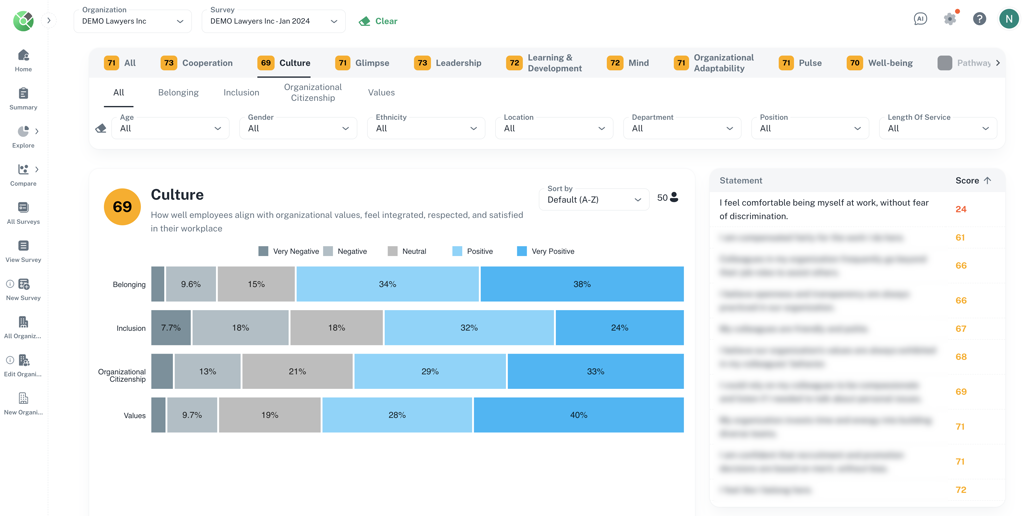
A couple of years ago, two founders with a great idea and a proof of concept in the HR space brought me on as the third person in the partnership — the technical wizzard. The product helps businesses genuinely understand their employees: carefully designed surveys, built by professional psychologists, covering culture, wellbeing, ethics, how employees see the business treating its customers, and more. The critical design decision is that the questions are the same for every business, which means the anonymised results can be benchmarked against other companies. A score of 6.5 on mental health means nothing in isolation, but if you know the industry baseline is 8, then you have a measurable insight.
I built the platform end to end: back end, front end, data platform, integrations, and the visualisation layer. All in my spare time, which forced ruthless prioritisation of tools and frameworks that would get us to something usable fast. The product is live today with a modest but real user base, and it’s particularly popular with HR consultants who use it to drive change for their clients.
My favourite story: a leadership team who scored their own company glowingly, ran the survey, and discovered their employees rated things a medium at best. Needless to say, they didn’t enjoy the news. But once the bitter taste of the truth had passed, they acted on it. Consecutive surveys (same people, same questions) showed things measurably improving.
If you are interested please check it out at coefficient-solutions.com.